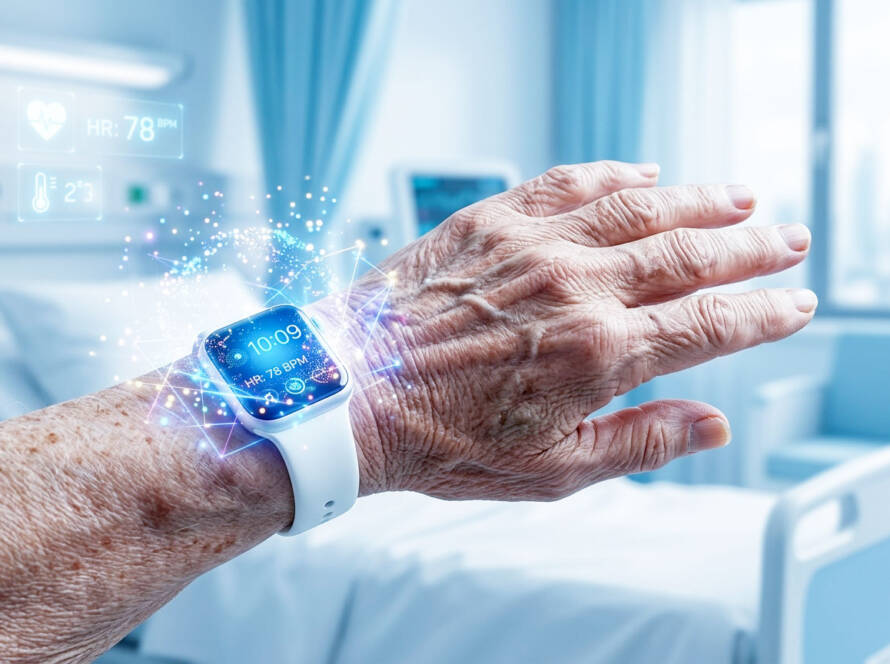
The world is ageing rapidly. By 2050, Asia-Pacific will be home to 1.2 billion people aged 60 and over — nearly a quarter of its population. Asia-Pacific leads the gerontech surge, commanding 21.8% of the global market as nations like Japan and China grapple with accelerating ageing populations. Forecasts indicate sustained double-digit growth at around 13% Compound Annual Growth Rate (CAGR) over the next decade. [1]
The Forces Driving Gerontech Expansion
Critical factors include acute caregiver shortages, growing technology adoption among older adults, and policy momentum favouring ageing-in-place initiatives over institutional care models. Together, these dynamics position AI, IoT, and robotics as essential tools for modern gerontechnology.
Trend 1: AI-Assisted Emotional Connection (AEC)
One in three seniors experiences social isolation, but AEC through AI companions provides a powerful antidote. These conversational robots leverage natural language processing and affective computing to engage in meaningful dialogue, detect mood shifts, and deliver empathetic responses — significantly reducing loneliness. Evolving via machine learning, they cultivate personalised emotional bonds that enhance mental wellbeing without replacing human relationships.
Trend 2: Predictive Wearables Enabling Proactive Care
Reactive fall detectors belong to the past; advanced wearables now anticipate problems. Smart patches track gait patterns, vital signs, and movement to predict falls well in advance. Linked via IoT networks, they deliver instant notifications to caregivers, dramatically reducing hospital admissions and facilitating genuine ageing-in-place.
Trend 3: Robotic Assistance Enhancing Mobility
Exoskeletons and support robots enable many mobility-limited seniors to walk, stand, and manage routine tasks autonomously. Compact robotic arms tackle household chores, whilst AI-powered rehabilitation devices hasten recovery. In densely populated Asian urban centres, such space-efficient technologies prove transformative for elderly residents.
Trend 4: Smart Homes Fostering Independence
Picture refrigerators that automatically reorder provisions, lighting that aligns with circadian rhythms, or doors secured by facial recognition. Comprehensive smart home systems identify irregularities — such as prolonged inactivity and alert families, all whilst safeguarding privacy. For those with dementia, these setups deliver subtle prompts, effectively converting ordinary homes into sophisticated care environments.
Trend 5: Remote Health Monitoring Platforms
Telehealth integrations with gerontech allow continuous vital sign tracking through non-intrusive sensors. Platforms analyse data in real-time to detect early signs of conditions like heart irregularities or cognitive decline, enabling timely interventions. This trend particularly benefits rural Asian communities where access to specialists remains limited.
Ethical Considerations and Challenges Ahead

Whilst promising, gerontech must navigate privacy concerns, digital divides, and algorithmic biases. Developers prioritise transparent AI frameworks and inclusive design to ensure equitable access across socioeconomic groups. Regulatory harmony across Asia-Pacific will further accelerate adoption.
The Broader Implications
Gerontech represents not just technological progress, but a societal pivot towards empowering older adults. With markets expanding and innovations maturing, it promises to redefine ageing from dependency to active participation.
Conclusion
Gerontech is transforming elderly care across Asia-Pacific and beyond. Global Research, with its expertise in innovative AI, IoT, and Robotics (AIR) solutions, actively contributes to this vital field by delivering tailored technologies that support healthier, more independent ageing.
References